Value-Based Care and Orchestral: Delivering Better Outcomes

AIValue-Based CareAnalyticsHealthcare

Value-based care (VBC) is reshaping healthcare by tying reimbursement to outcomes rather than volume. The model emphasizes quality, cost-efficiency, and improved patient health, requiring health systems to break down silos, use real-time data, and align incentives across providers and payers. Orchestral’s health intelligence platform is purpose-built to help organizations succeed in this shift.

Core goals of value-based care

  1. Improved quality of care – patients receive more coordinated, preventive, and personalized services.

  2. Reduced costs – both patients and organizations benefit from fewer duplicative tests, better chronic disease management, and proactive interventions.

  3. Better patient outcomes – success is measured by healthier populations, reduced hospitalizations, and greater patient satisfaction.

How Orchestral enables value-based care

Breaking down data silos

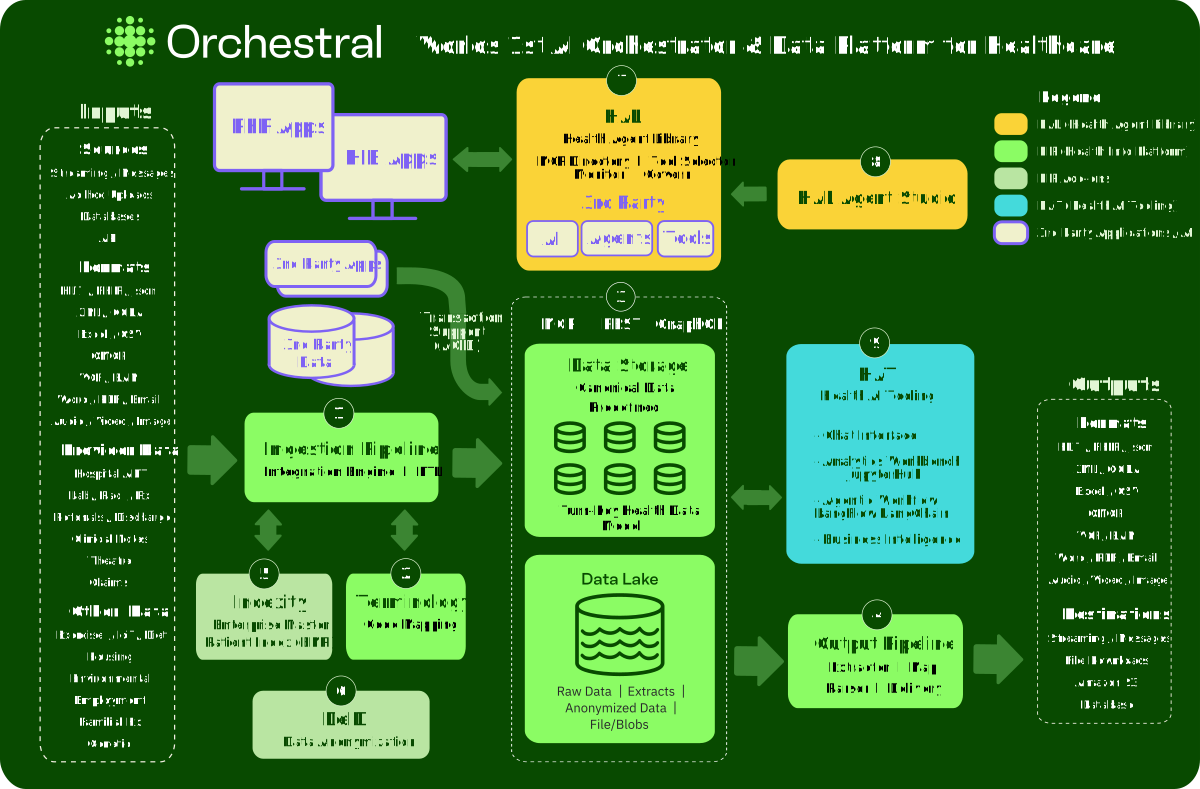
Orchestral unifies clinical, claims, social, and behavioral data into a longitudinal health record. By integrating disparate sources, providers gain a full view of patients’ health journeys, enabling more accurate performance measurement and intervention planning.

Proactive and preventive care

Through built-in AI/ML models and analytics, the platform identifies high-risk patients, predicts complications, and highlights care gaps. This allows clinicians to act early, preventing costly acute episodes.

Provider coordination and patient engagement

The platform delivers insights directly into clinical workflows via secure APIs and pre-built dashboards. Care teams can coordinate across specialties, while patient engagement tools help individuals stay connected with their care plans.

Benefits of Orchestral for value-based care

  • Improved care quality – evidence-based insights integrated into care delivery.

  • Reduced costs – efficiency gains through automation, reduced manual reporting, and proactive care.

  • Better patient outcomes – unified records and predictive analytics supporting whole-person care.

  • Faster time-to-value – delivered as a product, not a project, Orchestral is ready to run from day one.

  • Future-proof platform – designed with AI-first architecture, ensuring scalability for emerging models of accountable care.

Conclusion

Value-based care demands robust data, strong governance, and actionable intelligence. Orchestral provides all three in a unified platform that empowers providers, payers, and health systems to deliver smarter, safer, and more equitable care while thriving under value-based reimbursement models.


Frequently Asked Questions

What is value-based care and how does it differ from fee-for-service models?

Value-based care focuses on patient outcomes and care quality rather than the volume of services delivered. Providers are incentivized to deliver coordinated, preventive, and efficient care that improves health while lowering overall costs.

How does Orchestral support value-based care initiatives?

Orchestral unifies clinical, claims, and social data into a longitudinal patient record, applies AI-driven analytics to identify risks and care gaps, and automates reporting on quality measures. This ensures providers can meet value-based care requirements more effectively.

What kind of data can Orchestral integrate for value-based care?

The platform ingests and standardizes any healthcare data format, including HL7, FHIR, CCDA, claims files, and patient-generated health data. It also incorporates social determinants of health (SDOH) to support whole-person care.

How does Orchestral help reduce costs under value-based contracts?

By providing real-time insights, predictive risk modeling, and automated care gap closure, Orchestral prevents avoidable hospitalizations and reduces duplication of services. This leads to lower per-patient costs and more efficient resource allocation.

Can Orchestral improve provider and patient engagement?

Yes. The platform delivers insights directly into clinical workflows for providers and supports patient-facing tools for engagement. This ensures care teams and patients work together toward better outcomes.

How quickly can organizations expect results from Orchestral in a value-based care program?

Most organizations see results within weeks, not months. Because Orchestral is delivered as a product (not a lengthy consulting project), customers can begin automating quality reporting, tracking performance, and improving outcomes from day one.